Knysna Valuation Roll: What Every Homeowner Must Check Before 8 June 2026
May 4, 2026
What Affects the Cost of Hospitality Insurance in South Africa?
May 27, 2026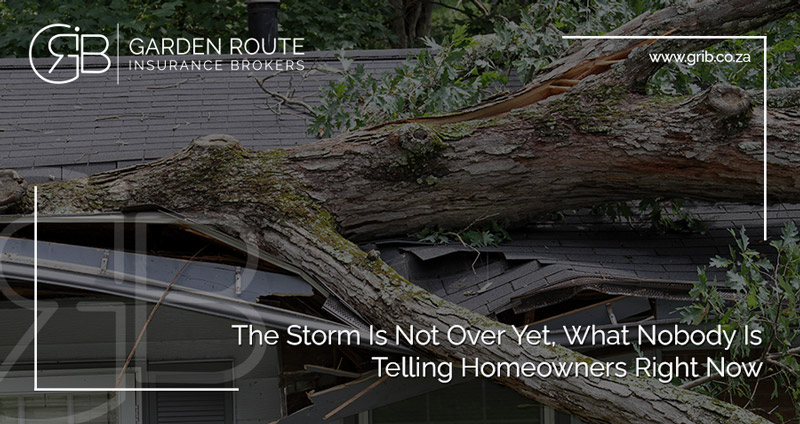
4 min read
Over the past few days, the Garden Route, Eastern Cape and Western Cape have taken a serious beating from heavy rain, flooding and destructive winds.
But here is the important part: the danger may not be over when the rain stops.
Right now, the ground across many areas is heavily waterlogged. That means the next round of strong winds could pull down even more trees, loosen embankments, damage retaining walls and create delayed property damage, days after the actual storm has passed. This is something many people do not realise until it is too late.
A tree that survived the storm yesterday may still fall tomorrow because the roots are sitting in saturated soil.
Watch out for these on your property
• Large leaning trees
• Cracked boundary walls
• Waterlogged embankments
• Soft ground near driveways
• Trees close to roofs, cars and powerlines
If something looks unsafe, trust your instinct early
A note on trees: This guidance applies specifically to trees on your own property or within your boundary.
Can insurance help?
One of the biggest mistakes we see after storms is waiting too long to act because people are unsure whether insurance will help.
In many cases, insurers may assist with:
• Fallen tree removal
• Emergency protection work
• Preventative tree felling where a tree poses a risk
• Storm damage caused by wind, rain, hail or flooding
Every policy is different, and insurers apply limitations – on amounts, on what qualifies, and on the circumstances under which a claim will be paid. Before you assume you are covered, speak to us. We will check your specific policy and guide you on exactly what your limitations are, so there are no surprises when you need it most.
But – and this is very important – most insurers require authorisation before major work begins.
Do not rush into large removals, demolition or repairs before speaking to us. A quick phone call first can often save major frustration later.
What to photograph and what most people get wrong
Another important tip nobody really talks about: photograph the cause of the damage, not only the damage itself.
• Photograph the uprooted tree, not only the broken roof
• Photograph blocked drainage, not only the flooded room
• Photograph where the water entered the property
These details often become critical later during the claims process.
Keep every invoice and quote
Whether it is a tree felling quote, an emergency repair assessment, or a contractor callout, get it in writing and hold onto it. A verbal estimate is not enough. Your insurer needs documentation to process a claim, and having a paper trail from the start saves a lot of back-and-forth later.
On tree removal specifically: make sure the person doing the work is a qualified arborist or certified tree feller and that they carry their own insurance. An unqualified person working on your property without insurance creates a liability risk for you if something goes wrong. Some insurers will also question a claim if the work was not carried out by a competent professional. Ask for their credentials and proof of contractors all risk liability insurance before they pick up a chainsaw. A reputable tree feller will have no problem providing this.
What if your tree falls onto your neighbour’s property?
This is the situation that catches most homeowners off guard.
If a tree from your property comes down onto your neighbour’s fence, car, roof, or garden: do not admit liability. Do not apologise in a way that implies legal responsibility. Do not agree to pay for anything on the spot, no matter how uncomfortable the conversation feels.
Instead, refer your neighbour directly to us – your broker.
That is exactly what your home insurance is there for. We will handle the conversation, liaise with their insurer where needed, and help work out who is responsible for what. You do not need to figure that out alone, and you should not make commitments you cannot legally keep.
What if your neighbour’s tree falls onto your property?
The same applies in reverse.
If a tree from your neighbour’s property comes down onto your fence, car, roof, or garden – contact us. Do not try to resolve it directly with your neighbour, and do not start any removal or repairs without speaking to us first.
We will advise you on your options, help you understand what your own policy covers, and guide you through the process of engaging with your neighbour’s insurer where needed. You do not have to navigate that conversation alone either.
The Bottom Line
Insurance is not only about policies. It is about people helping people during stressful moments.
At Garden Route Insurance Brokers, our role is not simply to process claims. Our role is to guide, explain, help you think clearly during difficult situations and help you avoid mistakes before they become problems. That is what a real broker should do.
Please stay safe over the coming days, especially if more wind arrives while the ground remains saturated. If you are unsure about anything, even if it is simply “Does this tree look dangerous?” rather ask early.
Sometimes the best claim is the one prevented before the damage happens.
From all of us at Garden Route Insurance Brokers: please stay warm, stay cautious and look after one another.